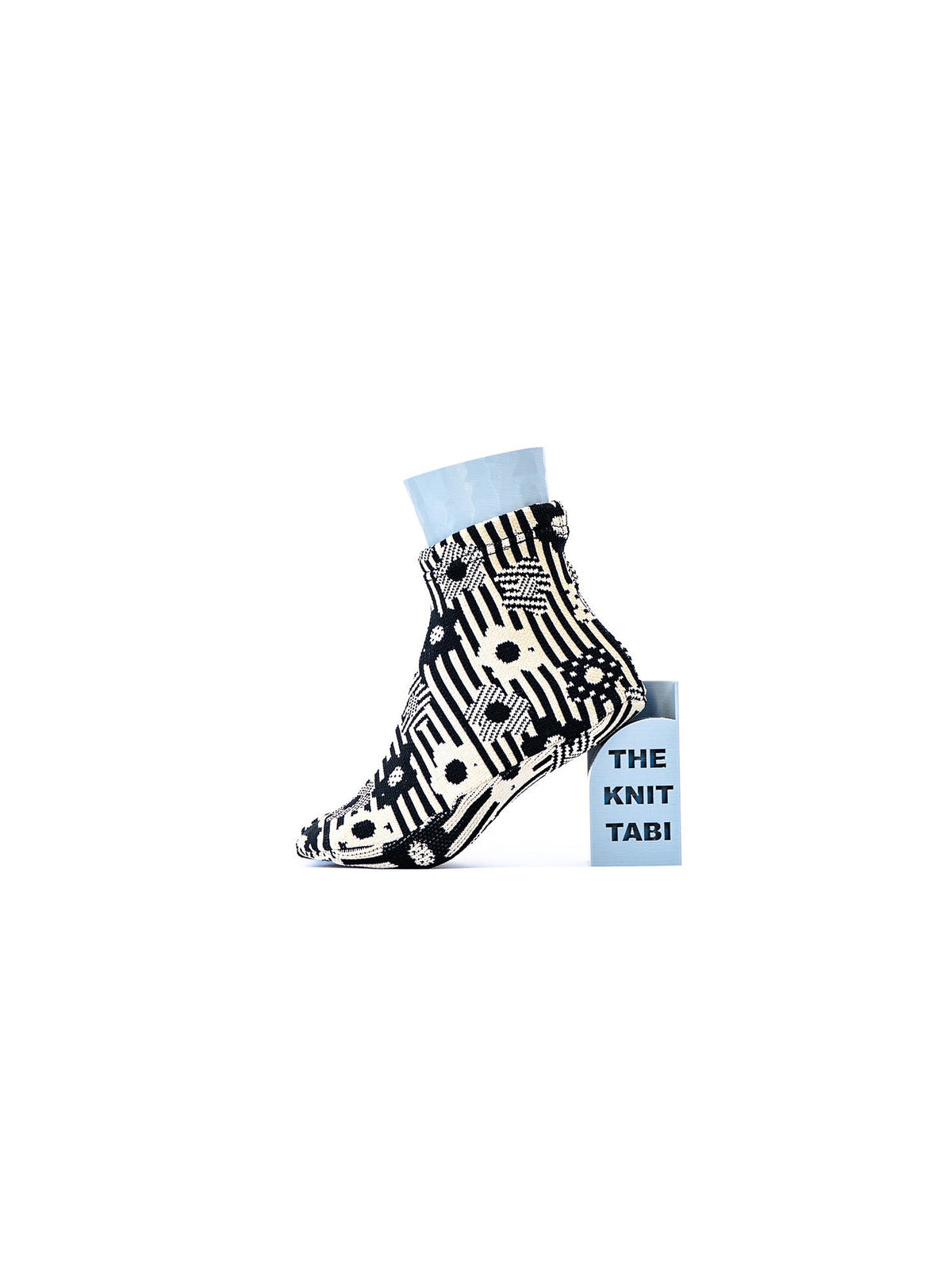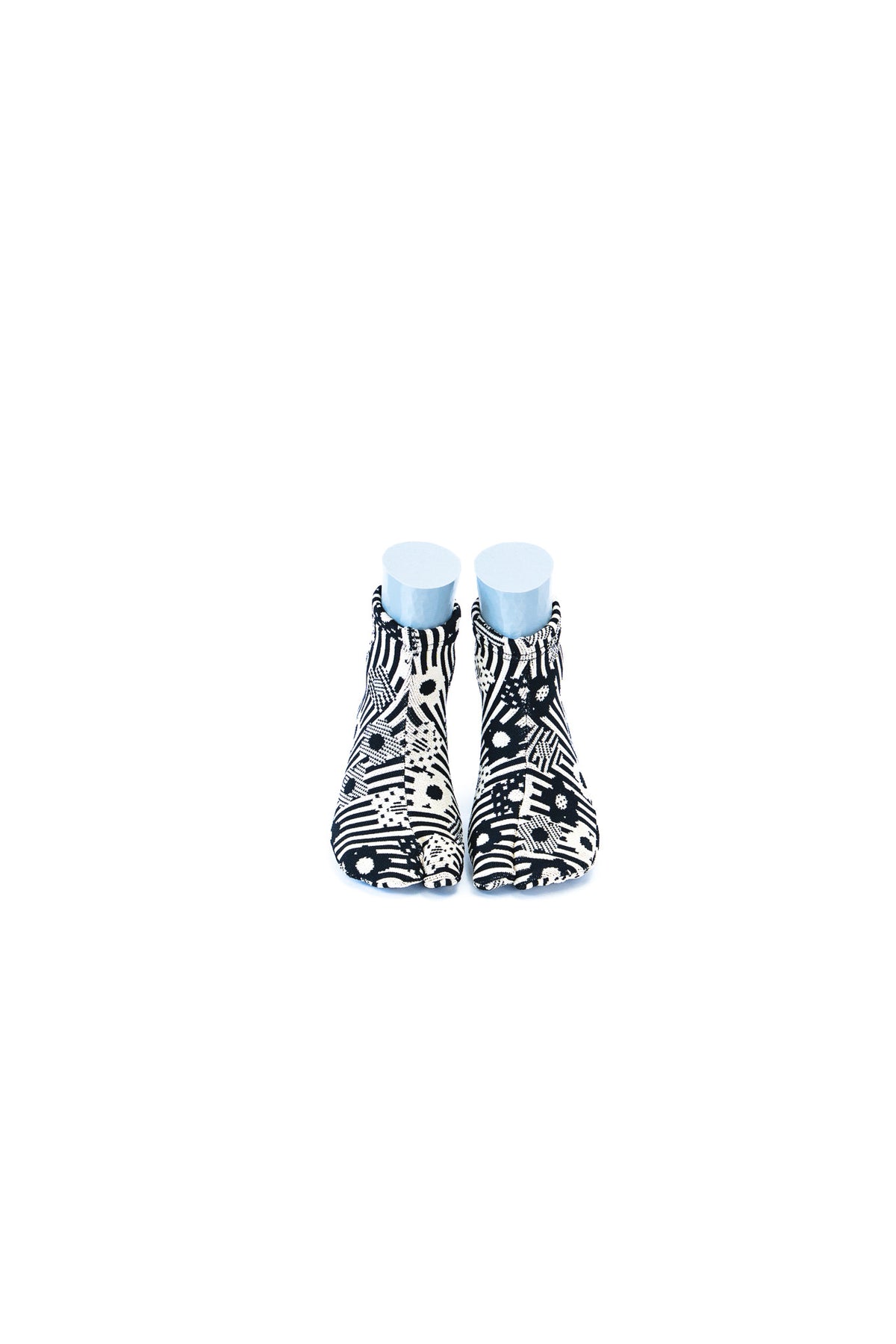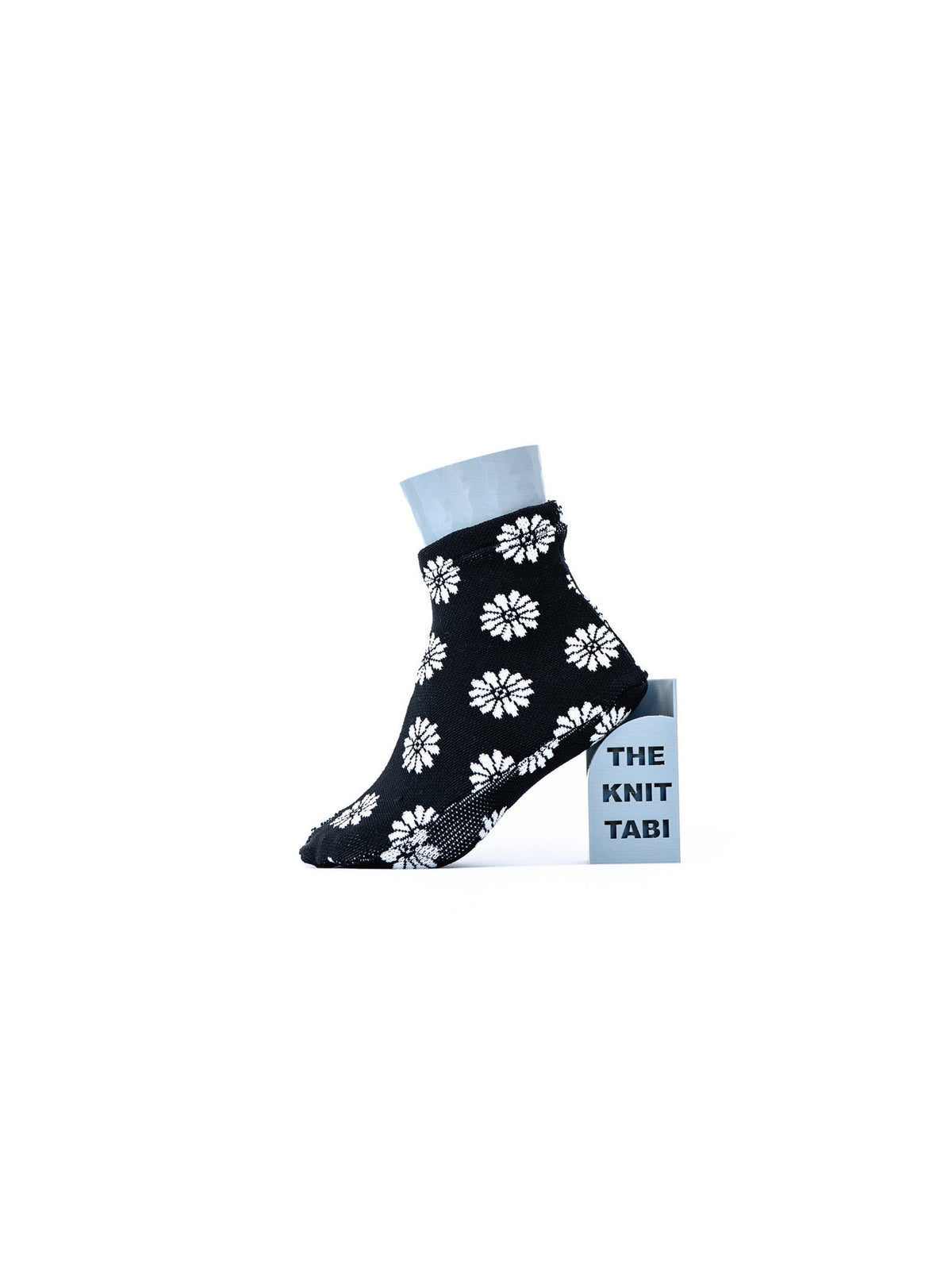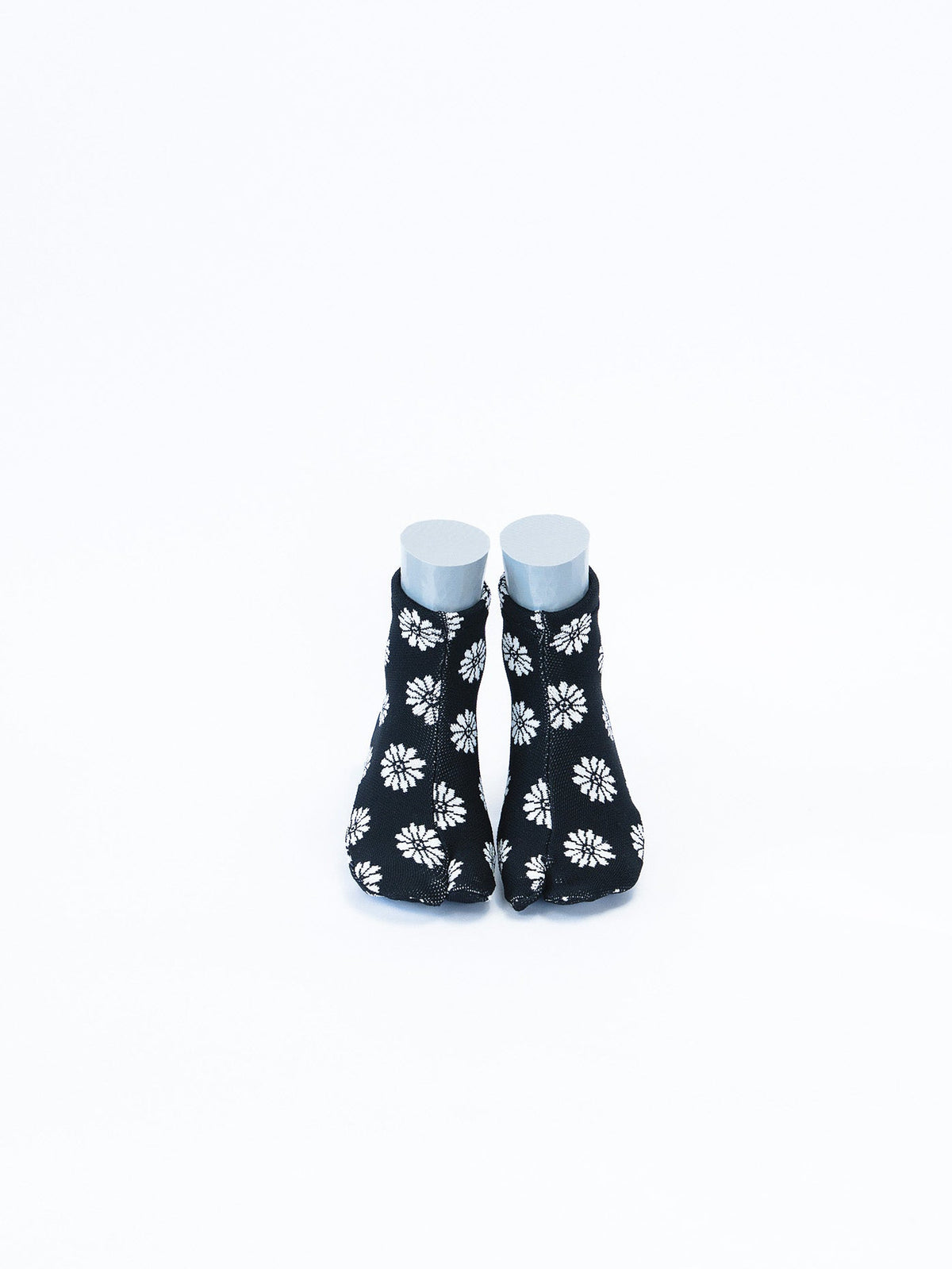
WAGARA: Japanese traditional patterns — the second series of The Knit Tabi
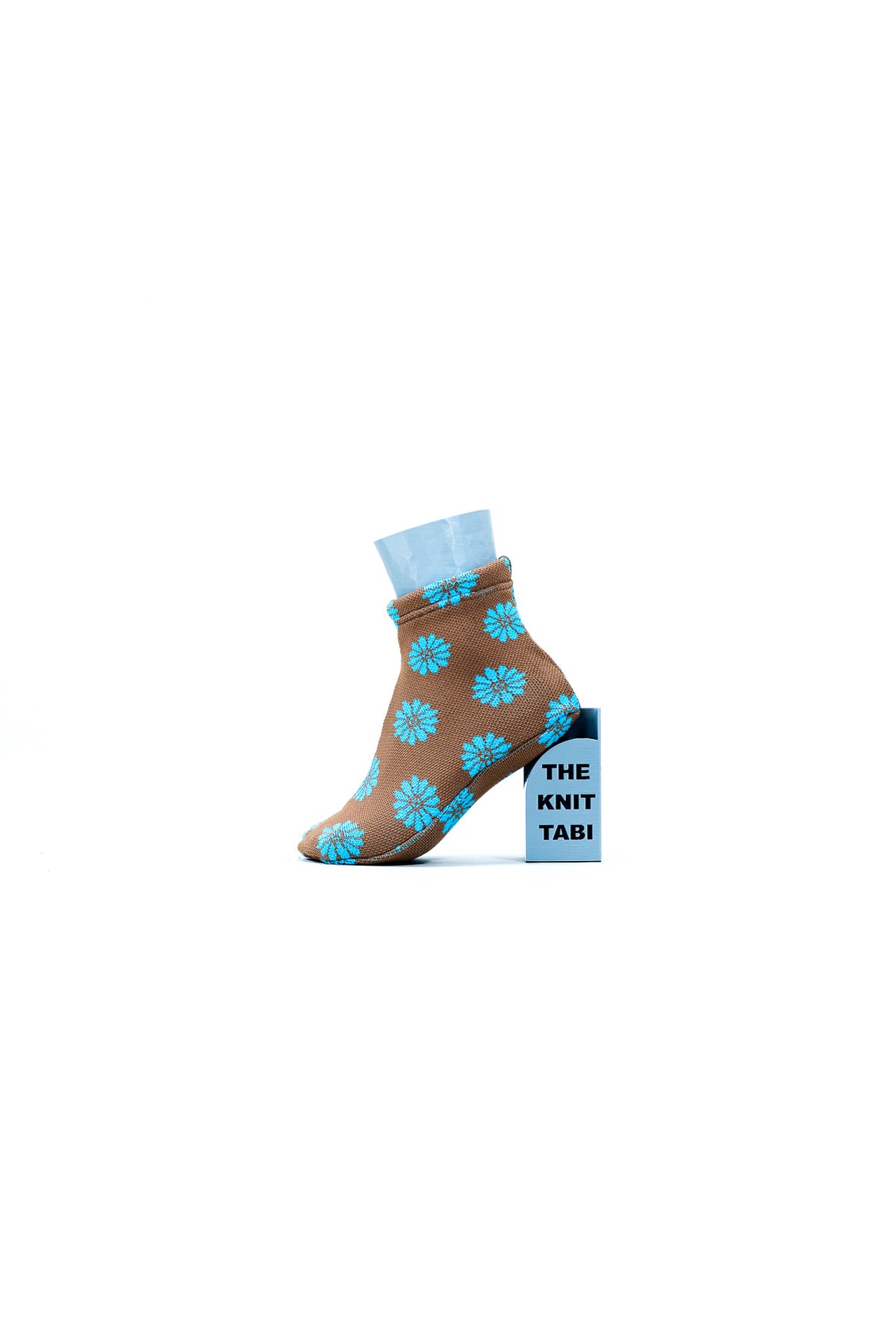
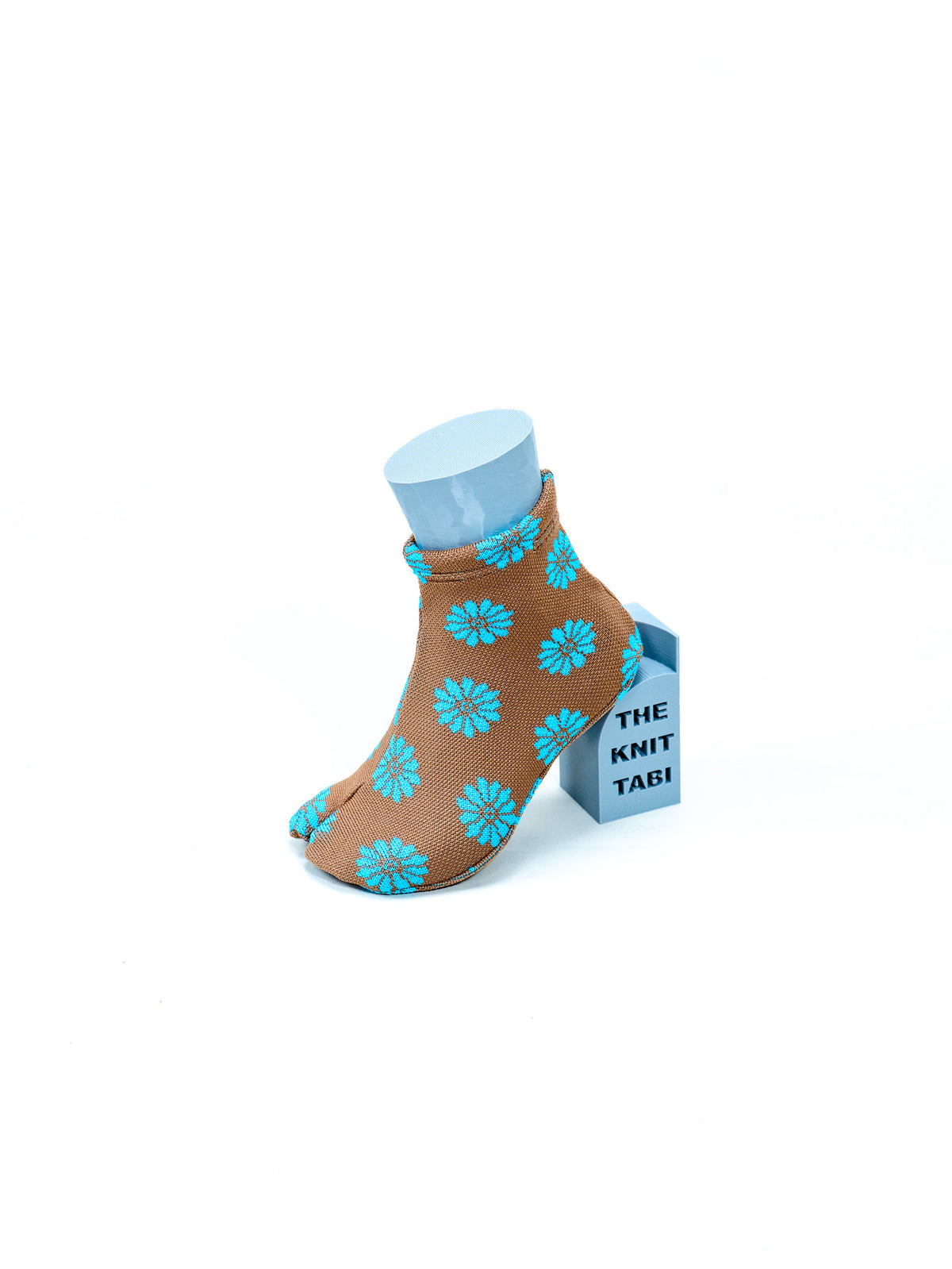
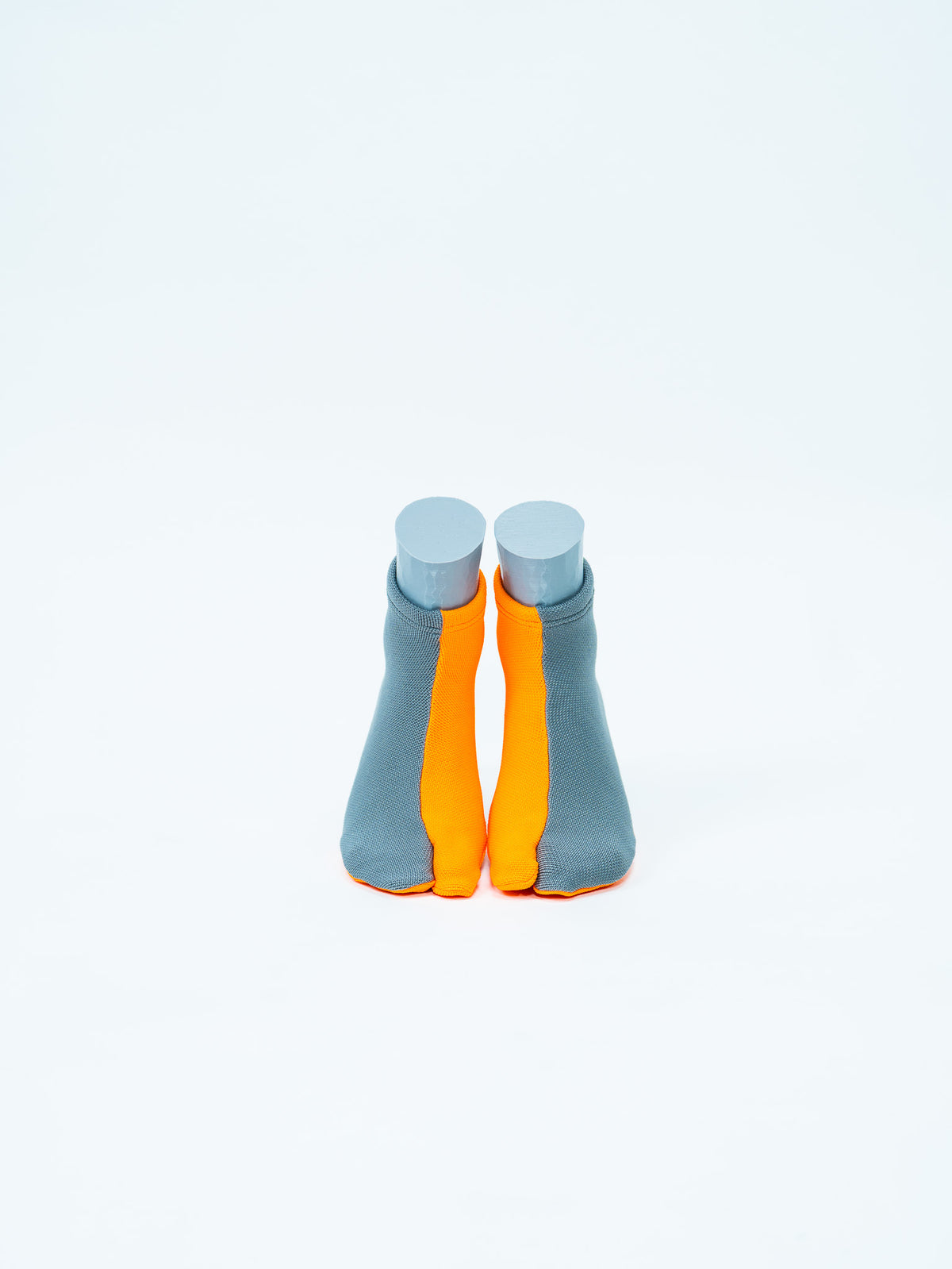
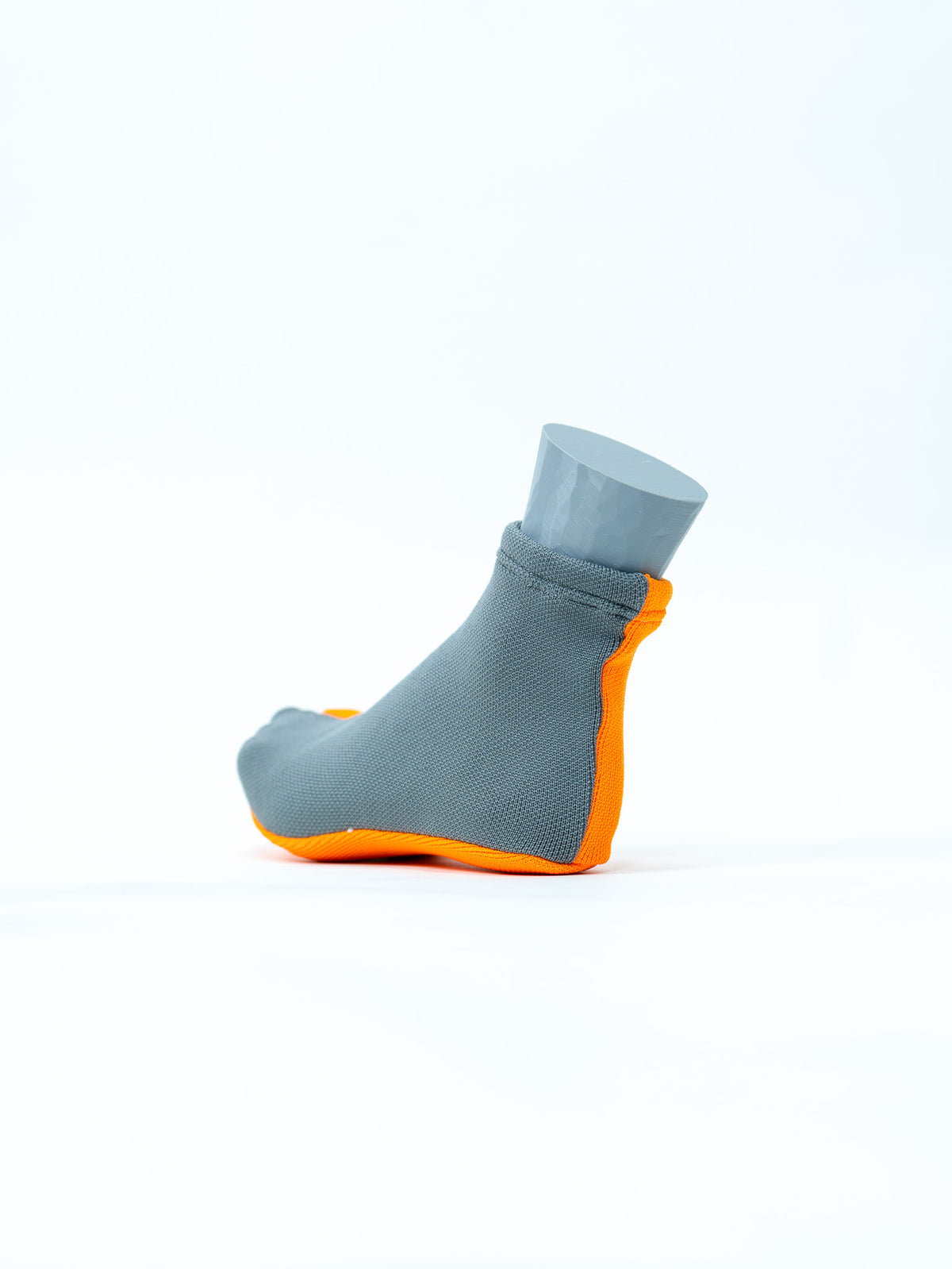
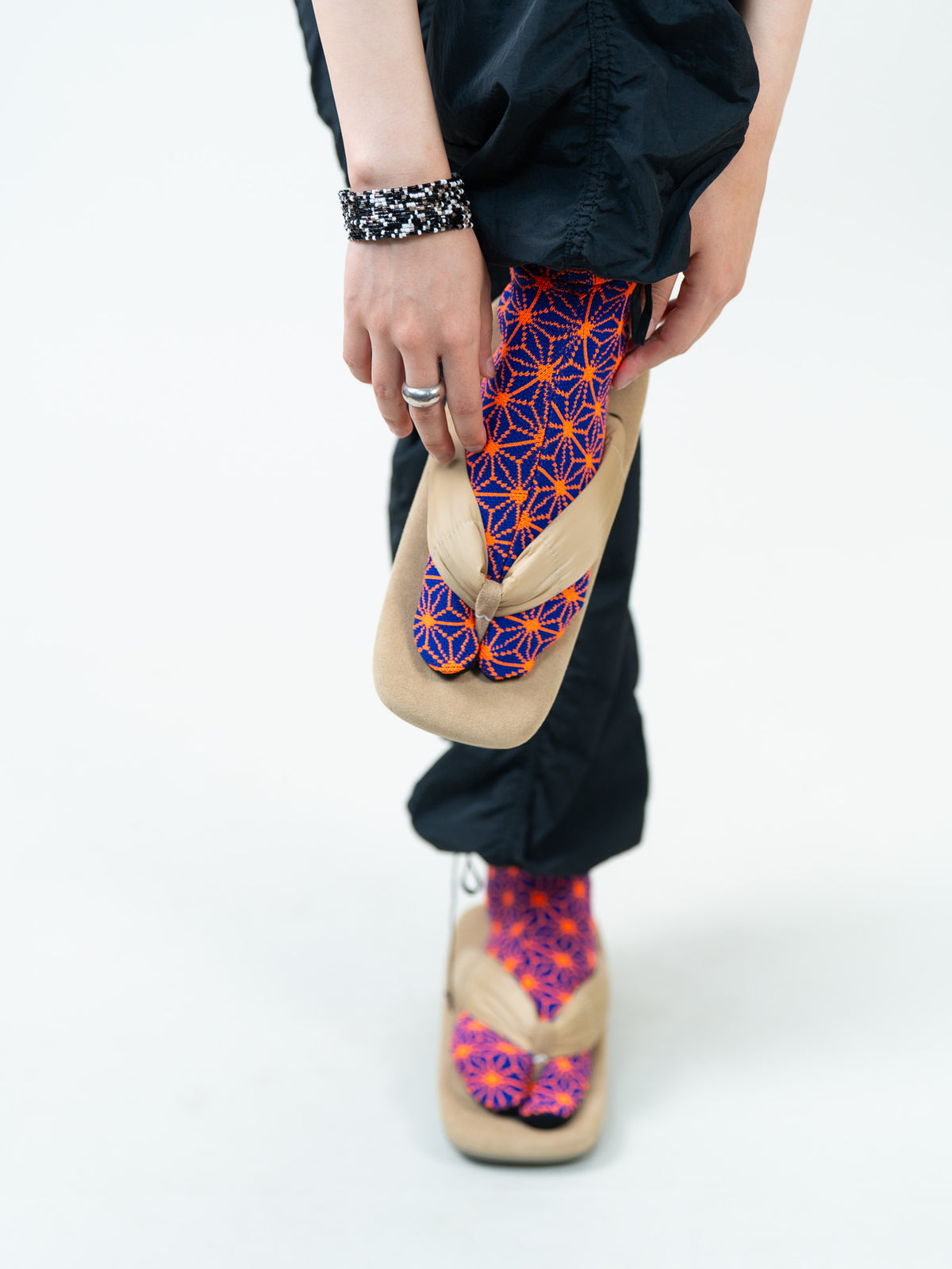
Since its launch in June, The Knit Tabi has come in eight colours: four plain, two with dots and two in two-tone colourways. For the second series, we are going with patterns. The theme is “WAGARA”: traditional Japanese patterns, re-knitted in ISAMI’s colours.
The second series is all about pattern
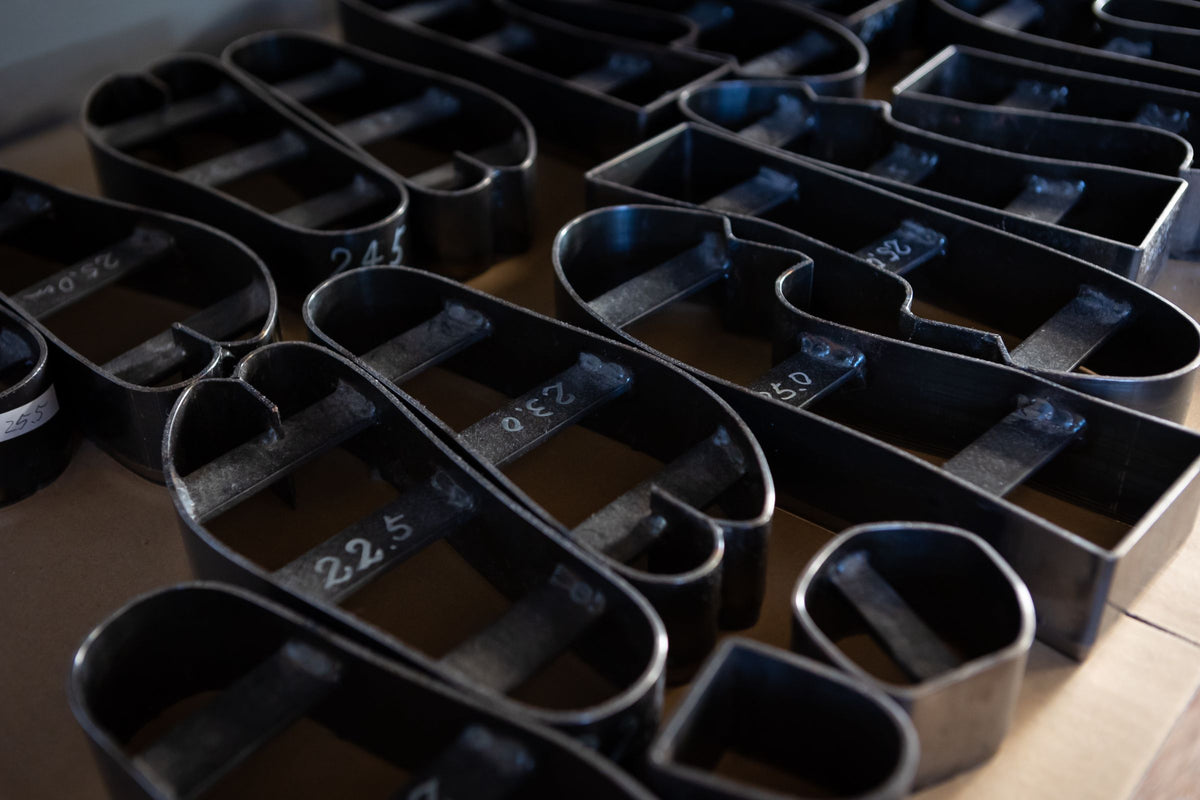
For the second series, the pattern is knitted into the fabric by jacquard, and the fabric is then cut with tabi-shaped cutting dies and sewn. It is not printed; the pattern itself is knitted in coloured yarn. Because the pattern is decided at the fabric stage, making it means going back and forth with the mill that knits our fabric, Mitsumoto Textile in Mitsuke, Niigata. The second-series patterns came out of that exchange.
What is wagara? A culture of wearing meaning
Wagara are the traditional patterns that have decorated kimono and everyday objects in Japan since long ago. Most are stylised forms from nature and daily life, and each carries a wish or a meaning. To choose a pattern is to choose a wish. That is the culture of wagara.
The leaf of a plant that grows straight and fast, for a child’s healthy growth. The shape of a shell, for a long life. A tree that stays green through winter, for lasting prosperity. Gentle, repeating waves, for continued peace. A run of diamond shapes, for descendants to flourish. A flower that blooms in autumn, for nobility and long life. This is how people in Japan gave their wishes a form and wore them. Together, these patterns of good fortune are called kissho monyo, auspicious motifs.
Patterns of good fortune
In Japan, the more festive the occasion, the more it was celebrated with pattern: New Year, weddings, Shichi-go-san (the rite for children of three, five and seven). On kimono and obi sashes, on furoshiki cloths and tenugui towels. An auspicious pattern was both the wearer’s own wish and the feeling of the person who gave it.
Tabi — the split-toe socks worn with kimono — stood at the feet of that culture. Gyoda is a town that still makes tabi today.
WAGARA, in ISAMI’s colours
But put a traditional pattern on a tabi as it is, and it sits a little far from our everyday lives. What ISAMI decided was to inherit the pattern and make the colour today’s.
For the second series, rather than the colour pairings long regarded as standard for wagara, we chose colours for each pattern that stand out at the foot with sneakers or sandals. A familiar pattern in an unfamiliar colour. That slight sense of surprise is what WAGARA is after.
What these patterns have carried is a wish: for a long life, for peace, for prosperity. That wish, in the form of a tabi.
Due around mid-October
The second series, “WAGARA”, is due to go on sale around mid-October 2026. Which patterns, in which colours, will be revealed on the product pages at launch. The price is the same as the first series, ¥3,300 including tax, and we plan to offer the same two sizes: M (23.0–25.5 cm) and L (26.0–28.5 cm). → Size guide
Launch news will be posted on Instagram @isami_japan and in this JOURNAL. Alongside our online store, we plan to stock it at our Gyoda main store and ISAMI Store in Kawagoe. For the latest, see Stockists.
From this second series, the making of The Knit Tabi has also changed a little. What changed is in The Knit Tabi has already been updated four times.