Tabi vs. Socks: Five Differences, Seen Through How They're Made
Tabi and socks. Both go on your feet, and the difference is usually explained in terms of shape alone: tabi have a split toe, socks don't. But from where we stand — as people who have made tabi for a living — the biggest difference isn't the shape at all. It's how they are made. In this article, ISAMI, the brand launched in 2025 by Isami Corporation, a tabi maker founded in Meiji 40 (1907), looks at what separates tabi from socks through the lens of construction.
In short: the five differences between tabi and socks
Here are the conclusions up front.
- How they're made—Socks are knitted into a tube on a circular knitting machine, formed as they go. Tabi are cut from cloth and tailored.
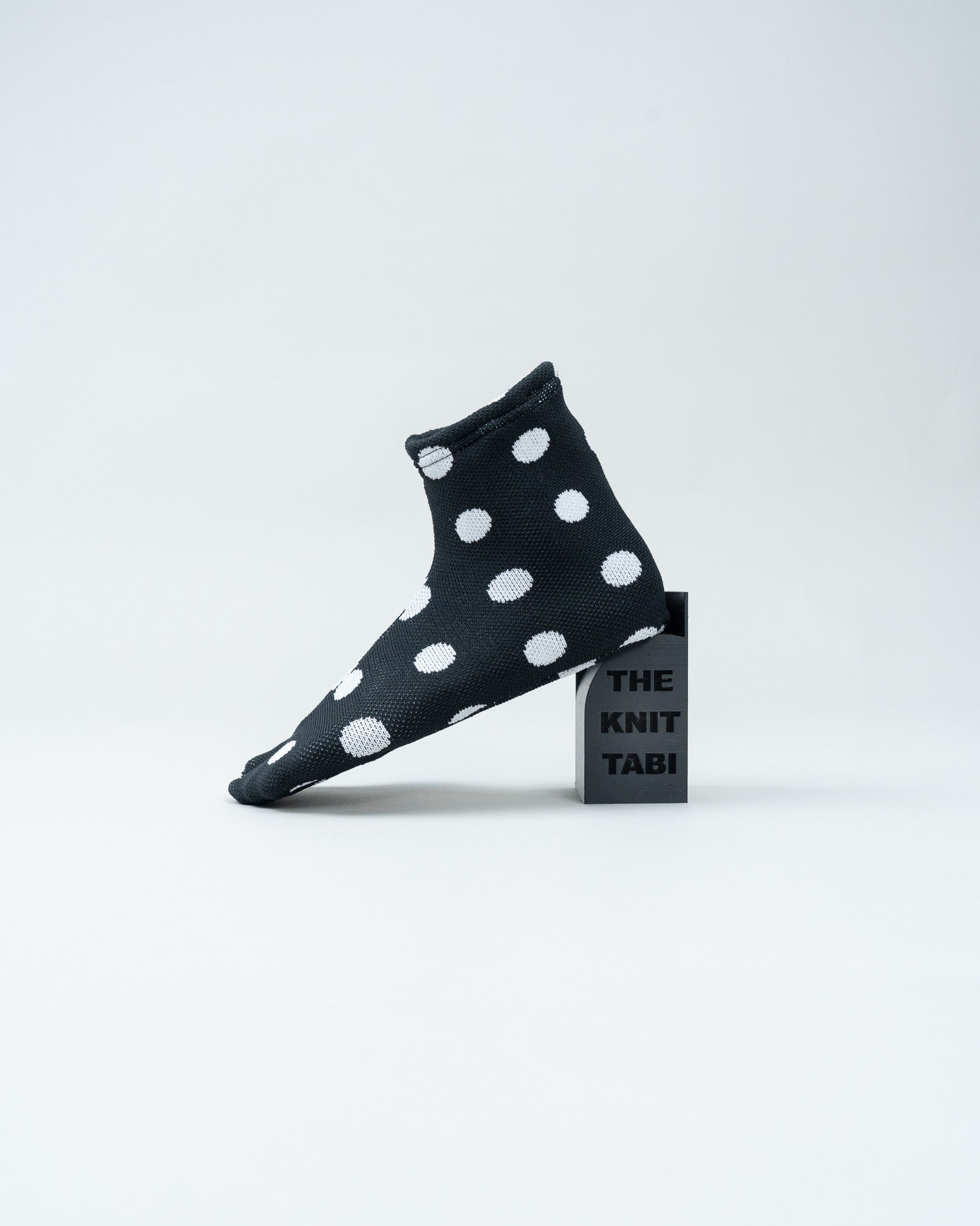
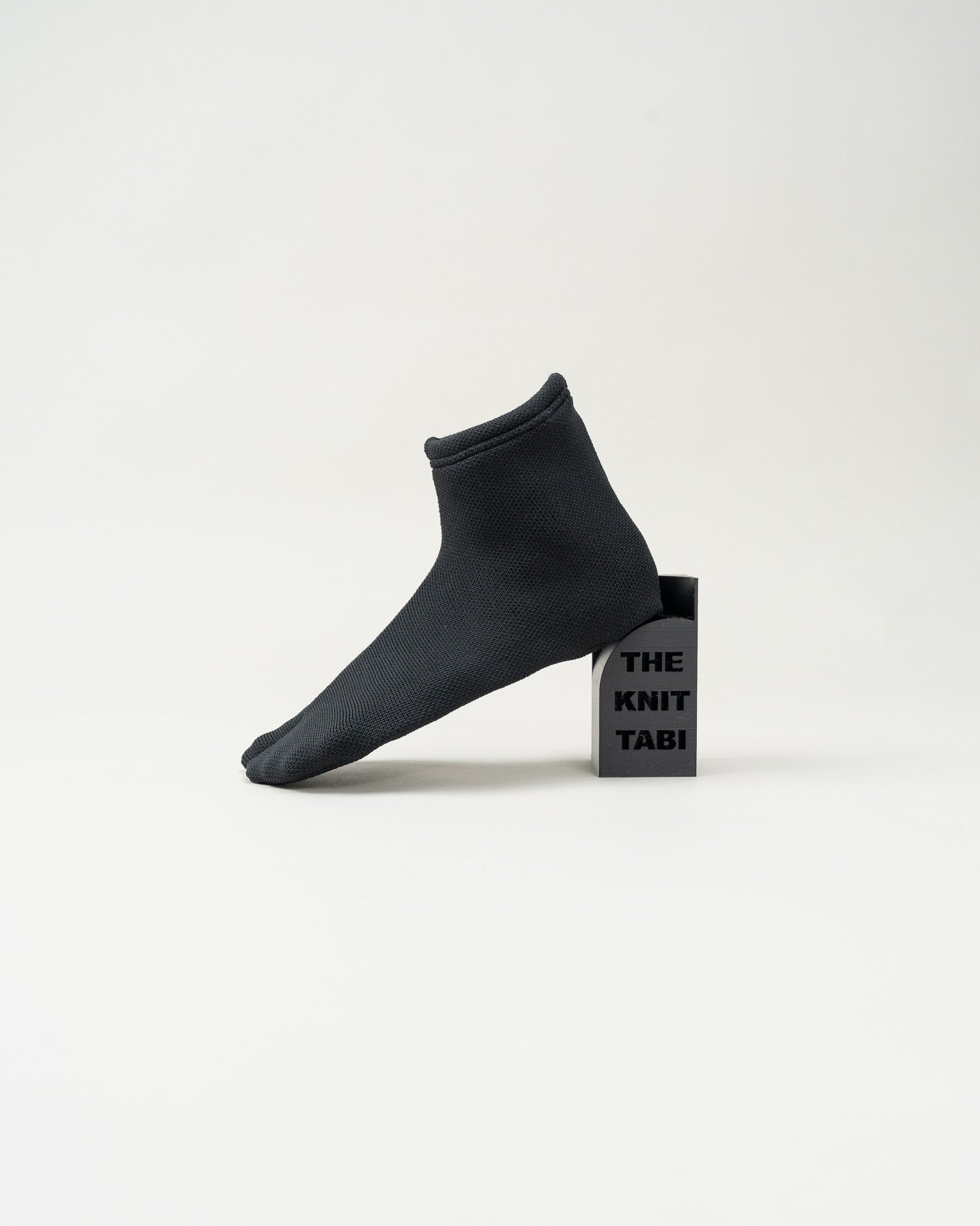
- Shape—On tabi, the big toe sits on its own.
- How they fit—Socks wrap the foot through the stretch of the knit. Tabi follow the foot through the way they are cut and sewn.
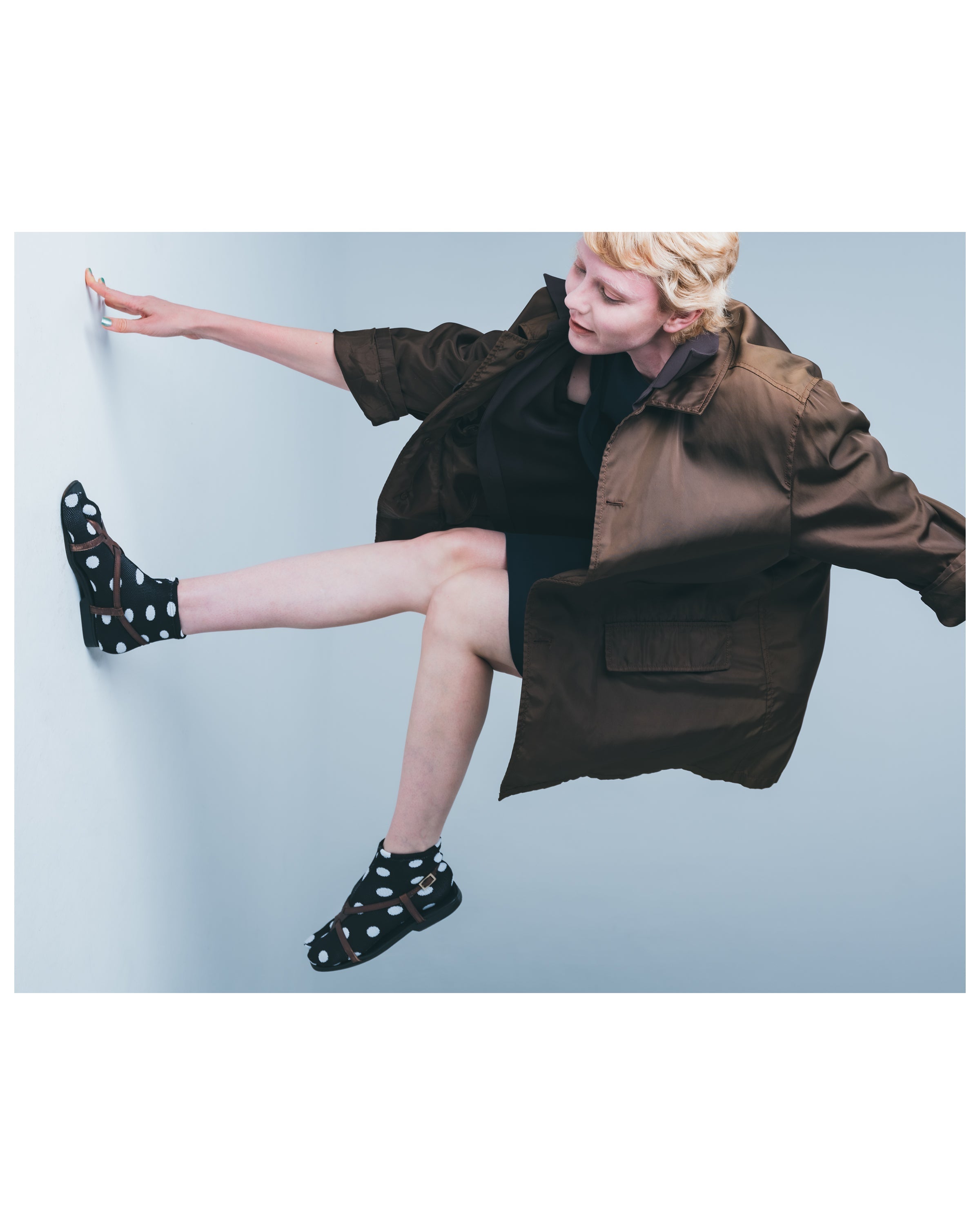
- What you can wear them with—Because the big toe sits apart, tabi work straight away with thonged footwear: setta and geta sandals, or any sandal with a toe post.
- Character—The softness of a knitted thing, versus the three-dimensional line of a tailored one. How they come into being becomes how they look.
The first point — how they're made — is the essential one. Two pieces of cloth you pull onto your feet, arrived at by completely different routes. Let's take them in turn.
Socks are knitted — formed on a circular machine
An ordinary sock is knitted from yarn into a tube on a machine known as a circular knitting machine. The curves of the heel and toe are shaped within the knitting itself, so what emerges from the machine is already, more or less, a sock. It is a method suited to making a great many things quickly and consistently, and it is the reason we can all wear comfortable, inexpensive socks every day. Split-toe "tabi socks" are, for the most part, an application of the same circular knitting.
Tabi are tailored — cut and sewn
Traditional tabi, by contrast, are not knitted at all. Woven cloth is cut to a tabi pattern, and the pieces — instep, sole, heel — are sewn together. It belongs to the same world as a shirt or a jacket: cutting and sewing.
Persuading flat cloth to follow a three-dimensional foot is where generations of regional know-how live, in the shape of each piece and in the handling of every seam allowance. Fit doesn't come from knitting something and letting it stretch; it comes from the way the seams are designed. That is the heart of tabi making.
Different shape, different construction — a different feel underfoot
With the big toe on its own, you can of course wear thonged footwear — setta and geta sandals, or sandals with a toe post — and you can also move your toes with something close to the freedom of bare feet. Some people describe a sense of the toes spreading out as they move independently (experiences vary from person to person).
And if a knitted, stretchy sock wraps the foot as a surface, a cut-and-sewn tabi is a shape that follows the foot. Neither is better than the other. The difference in how they are made simply becomes a difference in how they feel.
So what separates "tabi socks" from "knit tabi"?
The tabi socks you see so often now are, as noted above, mostly circular-knitted socks with a divided toe. They borrow the shape of a tabi; they belong to the family of socks.
The Knit Tabi, which we make at ISAMI, takes the opposite approach. It uses knit fabric, but rather than being formed on a circular machine, the cloth is cut with size-specific dies and sewn into shape using tabi construction. The fabric is a jacquard knit from Mitsumoto Textile in Mitsuke, Niigata, a region long known for knitwear; they worked the knit tension until it would stand up to being cut and sewn. The tailoring is done by us in Gyoda, Saitama — a historic tabi-producing town — with the skills tabi construction demands. It looks like a sock; in the way it is built, it is entirely a tabi. "Not knitted, but tailored" is the phrase we keep coming back to. You can read more about how these two regions came together on the About ISAMI page.
In closing: putting tabi back among the options
- Socks = knitted into shape on a circular machine
- Tabi = cloth cut and tailored into a three-dimensional form
- Tabi socks = socks in the shape of a tabi
- Knit tabi (The Knit Tabi) = knit fabric tailored by tabi construction
Fewer people wear kimono today, but the craft of tabi making remains. The Knit Tabi is that craft redrawn as an everyday pair to wear with sneakers and sandals. For sizing, see our size guide; for how people are wearing them, see the styling page. Next time you're deciding what to put on your feet, consider making room for a tailored tabi.